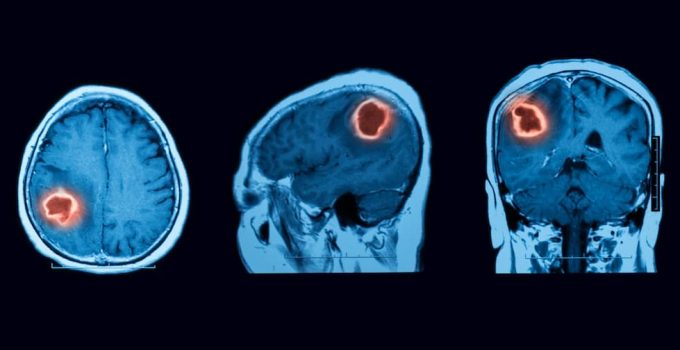
When diagnosing and classifying a brain tumor, the physician assesses many factors, including the location, size, and aggressiveness of the tumor. These factors help the physician decide if the tumor is operable or inoperable.
What is an inoperable brain tumor?
Operable tumors are those that the surgeon feels confident can be removed completely or partially. Inoperable tumors are those located in an inaccessible place in the brain, or those that are composed of multiple tumors that cannot all Read more [...] Inoperable Brain Tumors
When diagnosing and classifying a brain tumor, the physician assesses many factors, including the location, size, and aggressiveness of the tumor. These factors help the physician decide if the tumor is operable or inoperable.
What is an inoperable brain tumor?
Operable tumors are those that the surgeon feels confident can be removed completely or partially. Inoperable tumors are those located in an inaccessible place in the brain, or those that are composed of multiple tumors that cannot all Read more [...]
Genetic susceptibility to brain tumors is a difficult issue to sort out. About 5% of brain tumors may be linked to genetic factors, including the following conditions: Li-Fraumeni syndrome, tuberous sclerosis, neurofibromatosis, Turcot syndrome, nevoid basal cell carcinoma syndrome and von Hippel-Lindau disease.
How do these conditions lead to brain tumors?
In these conditions, people inherit a mutation in a tumor suppressor gene, making it more likely that the individual will develop a tumor
A tumor is formed when a group of cells in the brain show unusual growth patterns and develop into an abnormal mass of cells. There are two kinds of brain tumors: benign and malignant. A benign brain tumor is characterized by inactivity after a certain growth period and the inability to affect adjoining healthy tissues of the brain. This tumor is non-cancerous.
A CT Scan or an MRI report usually detects a benign brain tumor without difficulty. This kind of tumor has a slow pace of growth and mostly
The pituitary gland is a half-breed in many ways. It is not really a part of the brain, but rather hangs beneath it. Half of the gland, the posterior lobe, comes down from the brain and controls the body's water levels and secretes the hormone ADH -- anti-diuretic hormone. The other half, the anterior lobe, comes from tissues originating from the roof of the embryonic mouth, and controls sex hormone levels, lactation, growth hormone, body steroids, and the thyroid gland.
The pituitary is responsible
The pineal gland hangs on the brain behind its very center. French 18th century scientist Rene Descartes thought that the pineal gland was the core of the soul, noting that it was the only unpaired organ in the body, and located in the center of the brain. He thought that the gland controlled the movement of the various body "humors." In fact, the pineal gland is the "third eye" of the brain, and is responsible for telling the brain when it is day or night. It also controls the body's hormonal systems,
From Their Biology to Their Treatments
Brain tumor -- the very words strike fear in the heart of anyone threatened by one. It once was considered one of the most frightful events that could occur. Today, however, with improving technology and the gradual unfolding of scientific understanding of the basic biology of brain tumors, patients and families can look to the future with considerably more hope.
Scientists, physicians and researchers ponder the limitless questions concerning